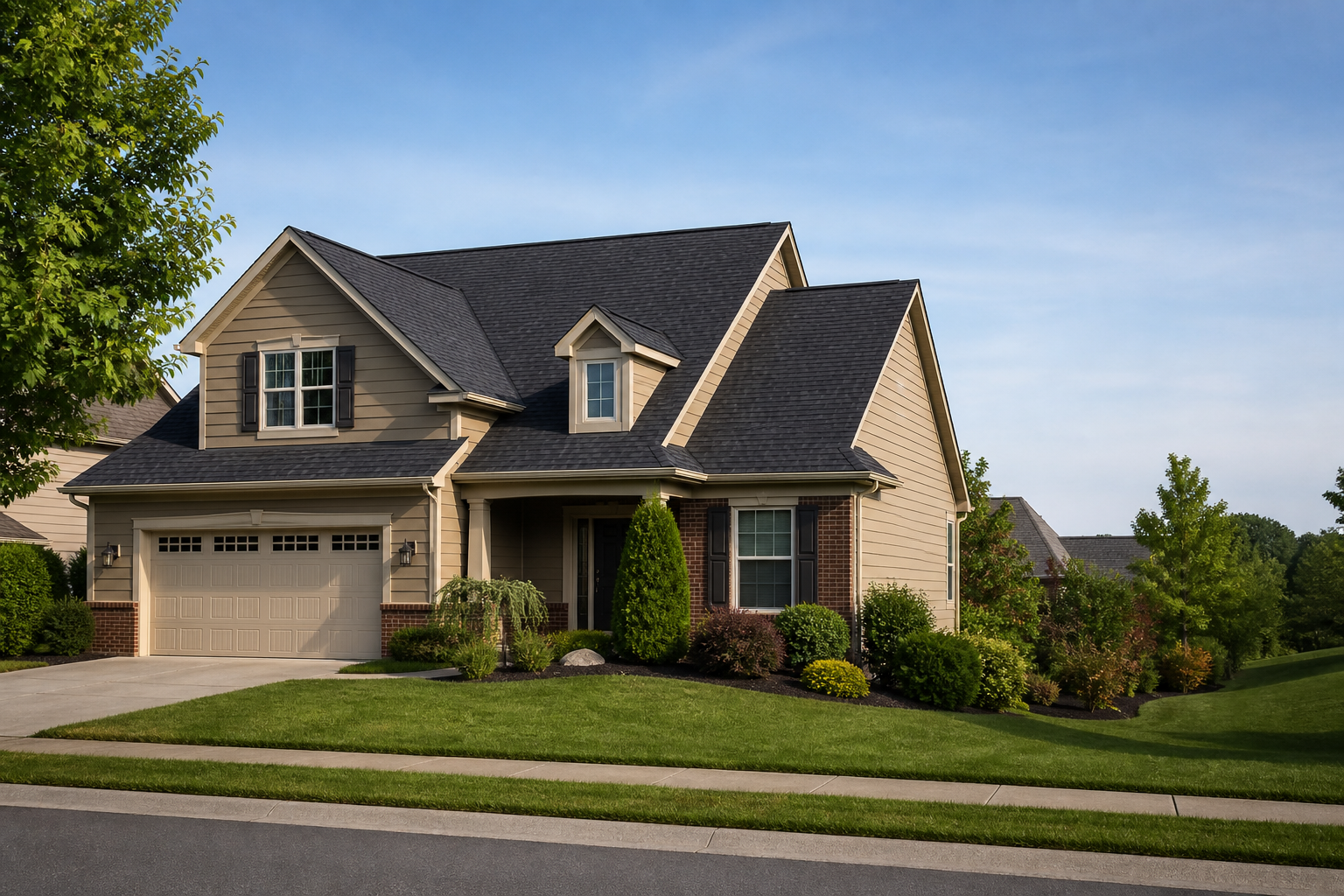
What is under the old siding
When I pull vinyl off a Springfield colonial, I usually find the original clapboards under it, and under those, board sheathing with no house wrap and no flashing at the windows. Vinyl installed over that in the eighties kept the rain off the clapboards and trapped whatever moisture came from inside or from the leaky windows. The rot is worst below the windows and at the bottom of the wall where splash and snow sit.
A siding job that does not deal with that layer is cosmetic. Mine starts with the sheathing: replace what is soft, wrap the wall, flash every opening with a sill pan and head flashing, and only then put the new siding on.
Clapboard, cedar, vinyl, and fiber cement
Wood clapboard is what most of the older houses were built with and what the historic neighborhoods around Forest Park and McKnight look right in. It needs paint, and it lasts a century if it is kept painted and the wall behind it is dry. Cedar shingles are common on the capes and on gable ends. Vinyl is the low-maintenance choice and is fine when it is installed with the right clearances and a flashed wall behind it. Fiber cement gives the look of wood with far less maintenance and holds paint well in this freeze-thaw climate.
I install all four and I will tell you which one suits the house, the budget, and how much painting you want to do over the next thirty years.
Trim and the details that keep water out
The trim is where siding jobs are won or lost. Cornerboards, window and door casings, the water table at the bottom of the wall, the frieze under the eave, and the rake boards up the gable. Each one needs a drip cap or a kerf to shed water and enough clearance from the roof and the ground to stay dry. I rebuild the trim to the original profiles on older houses, in wood or PVC depending on exposure, and I make sure every horizontal piece has flashing over it.
Kickout flashing where a roof edge meets a wall is the single most skipped detail in this region and the cause of a great deal of the rot I repair.
Siding and the roof edge
Because I roof as well, I pay attention to where the siding meets the roof. Step flashing at a dormer or a porch roof has to be woven into the siding course by course, and the gap between the bottom of the siding and the roof surface has to be kept open so water and ice can get out. A lot of vinyl siding in Chicopee and West Springfield was run tight to the shingles and is holding a strip of ice against the wall every winter.
Repairs versus a full job
Not every house needs to be resided. A north wall with rot under two windows, a gable end that has weathered through, or a section damaged by a fallen limb can be repaired and matched. I keep offcuts and profiles for the common clapboard and vinyl styles so a repair blends in. When the rot is everywhere under the siding, or the vinyl is brittle and cracking across the whole house, the honest recommendation is to do the entire elevation or the whole house.
Insulation while the wall is open
With the siding off, there is an opportunity that will not come again for thirty years: adding a layer of exterior rigid foam or dense-packing the wall cavities. On a house with no wall insulation, which describes most of the prewar stock here, that changes the heating bill and reduces the heat loss that drives ice dams on the roof above. I bring it up on every siding job. It is not always in the budget, but it is always worth the conversation.